
Getting started with beading activities for kids is much easier than it looks at first glance. Beading projects don’t just keep kids entertained; they help develop hand-eye coordination, problem-solving, creativity, and patience. The best part? You don’t need fancy supplies or previous crafting experience to have fun with beads.
From rainbow colored bracelets to animal shaped keychains, beading gives kids a practical way to use their imagination and practice important motor skills at the same time. If you’re interested in introducing your child (or classroom) to creative hands-on play, beading is a great place to start. Here’s everything I’ve learned about helping beginners jump into kids’ beading activities without feeling overwhelmed.
Why Beading Is Great For Kids
Beading does more than produce eye-catching jewelry or crafts for display. It trains small fingers to move with more control, helps kids focus attention for longer stretches, and encourages them to see patterns and sequences. These skills really come in handy later for schoolwork—especially with math and reading. Besides building coordination, beading gives kids a sense of pride when they show off something they made themselves.
- Fine Motor Practice – Picking up, sorting, and threading beads is excellent exercise for tiny hands.
- Creativity and Confidence – There’s no “wrong” way to bead, letting kids experiment and improvise freely.
- Quiet Time – Beading can be calming, making it great for rainy days or when a bit of focus is needed.
It’s satisfying for parents and teachers, too, to watch kids light up after finishing a project.
Choosing Beads and Supplies
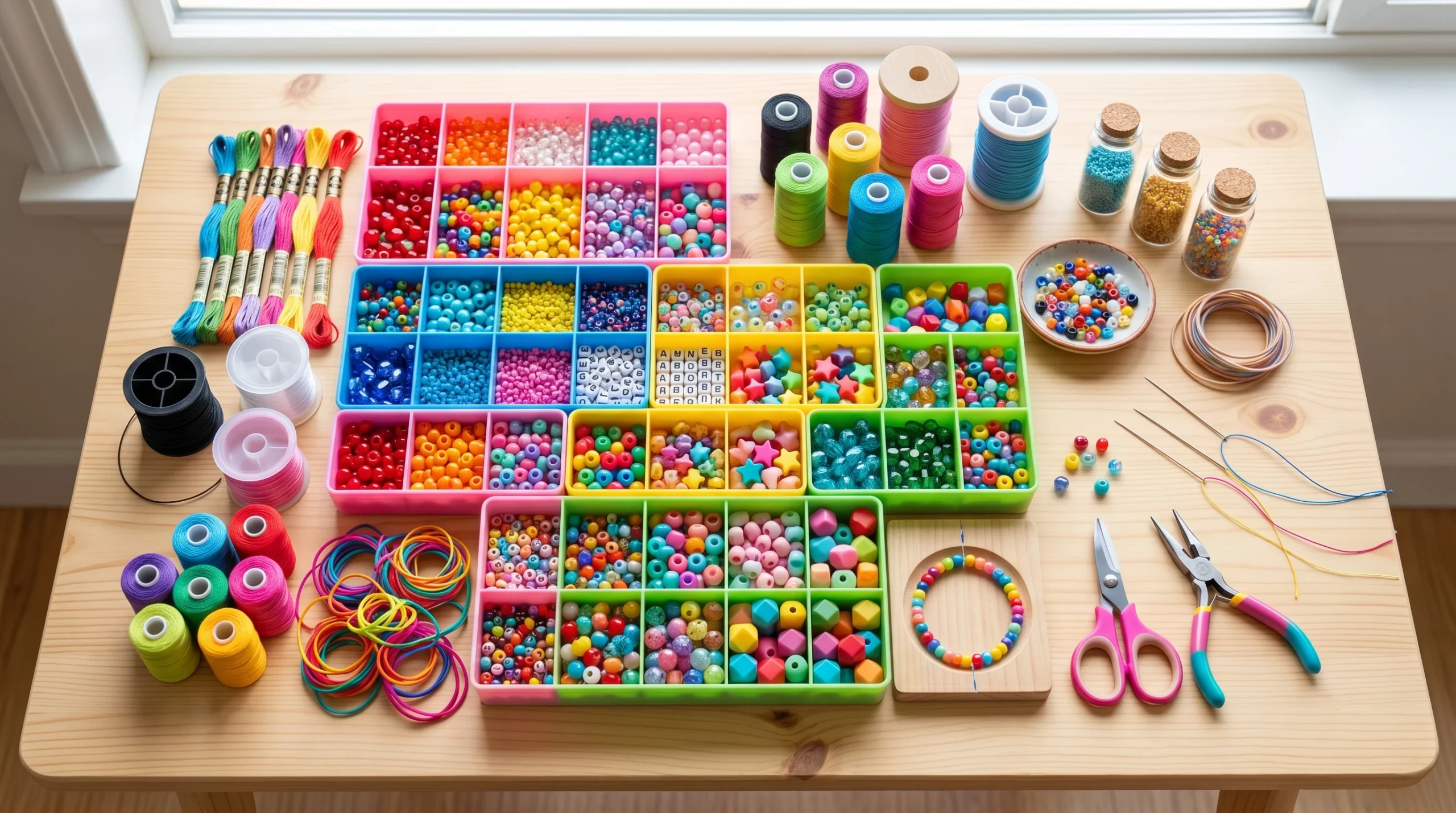
Walking down the craft aisle can feel a little overwhelming with all the options available, but for beginners, sticking to the basics is best. The main things you want: beads large enough for small hands, a soft and flexible string, and a workspace that keeps little parts together.
Kidfriendly Beads To Try
- Pony Beads: Colorful, plastic, and chunky; easy to handle and spot.
- Wooden Beads: Smooth, lightweight, and fun to paint or decorate.
- Foam or Felt Beads: Soft and safe, especially for young children.
- Perler Beads (Fuse Beads): These are placed on pegboards to make designs you can fuse with an iron later—with adult help for older kids.
String Options That Are Easy To Use
- Pony Bead Lacing Cord: Flexible, doesn’t tangle easily, and comes in bright colors.
- Elastic Cord: Perfect for bracelets, stretches over little hands effortlessly.
- Yarn or Shoelaces: Good for preschoolers since the ends are stiff and easier to thread.
You’ll also want a few small bowls for sorting, scissors, and maybe a plastic tray or tablecloth to catch loose beads.
Beginnerfriendly Beading Projects
Kids don’t need to start with complicated designs. Some of the simplest bead crafts are the most enjoyable.
Easy Beading Ideas
- Bracelets or Necklaces: A classic activity. Kids can pick their favorite colors or make color patterns to create truly unique pieces.
- Name Keychains: Use alphabet beads to spell out names or special words.
- Beaded Suncatchers: Thread beads onto pipe cleaners, shape them into stars or circles, and hang them in a sunny window.
- Bead Snakes or Animals: Alternate colors on a pipe cleaner, then twist to create tails or feet for cute animal critters.
Choose projects that feel manageable. Low-pressure, quick wins help kids feel successful and excited to take on more advanced projects next time.
Setting Up A Beading Station
Just a bit of organization makes beading projects less stressful, especially for younger kids or group settings.
- Cover the workspace with newspaper or an old sheet to make cleanup easy.
- Use shallow trays or muffin tins for sorting bead shapes and colors.
- Precut strings or cords to the right size so kids don’t need scissors.
- Keep water and paper towels close by for sticky fingers or accidental spills.
Having everything ready and organized smooths the way for everyone to focus on having fun with the activity.
Helping Kids Learn Basic Beading Techniques
Most kids pick up beading quickly, but here are a few tips to save frustration:
- Tape one end of the string. Fold a bit of masking tape around one end, so beads don’t slide off. Or, tie a big bead at the end.
- Show how to pinch and push. Teach kids to hold the bead with one hand and carefully pull the string through with the other.
- Start with simple patterns. For example, alternate two colors, or repeat three of one color and then one of another. It makes the process feel playful.
- Encourage patience. Mistakes and runaway beads will happen! Take breaks and give lots of encouragement along the way.
Encouraging Creativity and Exploration
Once kids have the basics down, you can inspire them to take beading further. Mixing materials gives nearly endless ways to create cool jewelry or decorations.
- Combine beads with buttons, pasta shapes, or homemade rolled paper beads.
- Let kids design their own color patterns, invent “creature” designs, or add painted wood pieces for a personal touch.
- Propose a themed craft like holiday decorations or superhero colors and watch what they dream up.
Following their interests naturally grows their confidence and keeps the activity fresh and fun.
Troubleshooting Common Beading Challenges
What If The Beads Are Too Small?
Begin with oversized beads (foam or wood) and use lacing cord that’s stiff and easy to grip. As kids get comfortable, you can let them try smaller beads with some help.
Strings Always End Up Tangled?
Cut shorter lengths in advance and keep spares handy. Thicker strings, like shoelaces or pipe cleaners, are also easier for little hands to handle and help prevent knots.
Kids Get Frustrated or Lose Pieces?
- Remind them it’s okay to make mistakes; practicing is more important than the finished project.
- Pick up dropped beads together as part of the fun instead of a chore.
- Break up the activity into smaller chunks so it never feels overwhelming.
Tips For Safe and Happy Beading
- Keep beads away from kids under 3 years old, since small beads can be a choking hazard.
- Use only non-toxic materials—important if you’re including painting or gluing.
- Stay close for the first sessions and give kids space as they grow more confident.
Always check that all cords are knotted securely before wearing jewelry and pack away leftover beads to avoid messes.
Getting More Out of Beading Activities
- Make beading a social event and invite friends over for a group craft session.
- Gift finished projects to family, teachers, or friends. It’s a meaningful, handmade present.
- Mix beading with lessons about colors, shapes, counting, and sorting for a bit of sneaky learning.
- Take photos of every finished piece and make a memory book or wall display at home.
As children’s skills improve, offer new challenges like beading with looms, making more advanced patterns, or mixing found items from nature with their collections.
Starter Action Plan for Beginners
- Gather your basic supplies—pick chunky beads and a flexible string.
- Pick a super simple project, like a bracelet using just two or three colors.
- Set up your workspace with bowls or trays so supplies are easy to find and grab.
- Show kids how to tape the string’s end and guide beads on without hassle.
- Give them room to create, make mistakes, and celebrate their finished piece with a smile.
Beading is a relaxed, enjoyable activity for both kids and adults to share. It nurtures skills, sparks creativity, and results in keepsakes for sharing and displaying. If you’re new to the world of kids’ beading, start simple and have a great time exploring all the fun possibilities.
If you have any questions or comments, feel free to leave them in the comments below.